
Search
Showing 10 of 540 results for group registration
-
Manawatu hosts agents
“A successful famil tour provides a holistic experience for the agents, and gives them first-hand knowledge and experience from which to recommend Palmerston North and Manawatu to prospective students and parents,” said Lesley McDonald, Co-Chair of International Education Manawatu (IEM).
“We decided that we would split the agents into two groups – those focussed on the tertiary sector and those on the secondary sector. That way, the agents in each group could focus on their specific sector and spend more time at the relevant institutions,” said Lesley.
The agent visit was timed to coincide with the Massey University graduation ceremony, demonstrating the successful outcome of study.
To give them a taste of the Manawatu student lifestyle, the agents stayed with homestay families in the region.
“We recognised that international education is more than the study experience – it also includes a safe lifestyle, leisure activities, internship and part-time employment opportunities which lead to residency and employment.”
“The agents saw the Royal New Zealand Ballet perform at the Regent Theatre in Palmerston North and had a trip to Wellington. One agent even stayed on an extra day to take part in a tour of Wairarapa wineries!”
For the visiting agents the visit was an immersion in what it’s like to live and study in Palmerston North and the Manawatu region, and for the education providers it was a chance to showcase the best their institution and the region has to offer.
For both, it was an invaluable relationship-building experience.
“We have received very positive feedback from the visiting agents who wish to build on the relationships with the educational providers that they met and interacted with”, said Lesley.
To fund the agent visit a cross-sector group of education providers – all members of IEM – pooled their resources, with some additional funding was provided by Education New Zealand’s Regional Agent Funding programme.
-
From the CE: Building back New Zealand’s international education experience
One of the highlights for me was experiencing a warm Southern welcome in Christchurch and Dunedin, in late August. It was useful to hear from a cross-section of key education providers and other education-related organisations about what’s top of mind for them. There was an opportunity to hear about their plans for the year ahead and discuss what’s being planned at Education New Zealand Manapou ki te Ao (ENZ), and how we can best support each other.
People expressed cautious optimism about inbound student numbers for 2022, saying they have adequate applications in the pipeline to be comfortable with progress (as much as 50% of pre-pandemic levels for some). They mentioned that the fourth border exception group of international students, Cohort 4, is having a positive impact on student numbers. Many of the recent arrivals had started their studies with New Zealand online in their home countries – a testament to the huge effort made by providers, with support from agents and our international teams, to continue reaching out to students and offering online study options while our borders were closed.
The visit ended with a Christchurch City Council and ChristchurchNZ mayoral welcome for around 140 tertiary international students, from across the wider Christchurch region – a memorable evening.
Another successful welcome for international students took place in September, hosted by the University of Auckland. Both Prime Minister Jacinda Ardern and Education Minister Chris Hipkins spoke at the event, in a clear demonstration of the government’s commitment to international students and international education.
This week I returned from a short visit to London and Barcelona, as part of ENZ’s plans to revisit all our key partner countries now our borders have reopened. The timing coincided with the annual EAIE Conference and Exhibition in Barcelona, which attracted more than 6,300 participants from over 90 countries. EAIE is the largest business-to-business conference and international education event in Europe. It provided a great opportunity to reconnect with key partners and other contacts, and to continue to let them know we are open to welcome students. You can read more about New Zealand’s pavilion at EAIE and the providers who took part in this month’s E-News.
In London, I had a series of meetings with key government and education sector contacts, including Professor Sir Steve Smith, the UK Government International Education Champion. A range of opportunities were discussed during these meetings, and we will follow up on these with the sector in New Zealand. I also met with journalists to promote a New Zealand education, including Times Higher Education and StudyTravel magazine. The final engagement of the London trip before heading off to Barcelona involved presenting an award at the PIEoneer Awards ceremony. The four awards won by New Zealand organisations that evening are covered later in this issue.
Finally, I’d like to thank everyone involved in the Asia Pacific Technical & Vocational Education and Training Forum, which took place from 14-15 September 2022. This online event, which is run in partnership between Te Pūkenga, Skills Consulting Group and ENZ, attracted more than 2,000 delegates from 60 countries, and has resulted in significant positive feedback.
In the spirit of Te Wiki o te Reo Māori I’d like to end with a whakataukī that highlights the importance of language:
Kia kaha, te reo Māori - Let’s make the Māori language strong!
Ngā mihi nui,
Grant McPherson
-
Eighteen million views and counting
Yichen is a cartoonist with five million followers on Weibo. (Weibo is one of the most popular social media platforms in China. A mix of Twitter and Facebook, it’s used by more than 30% of Chinese internet users.)
Yichen was accompanied by a team from Sina.Com. A multimedia outlet, Sina.Com owns Sina Weibo (which hosts Yichen’s account). Its education outlet, Sina Education, was the first professional education-focused online media platform in China. An interactive campaign involving Sina Education; Yichen’s dedicated visit Weibo account and her own personal account, and ENZ’s Weibo account, ensured maximum profiling of this visit on these channels.
The group visited eight institutions in Dunedin, Otago and Queenstown to raise the profile of the South Island as a study destination.
“Yichen’s followed by millions in China for her quirky and positive cartoons and posts about life. She began sharing her work on Weibo when a student at Tianjin Normal University, and has gone from strength to strength since then. Her work is clever, creative and innovative – all qualities that speak to the way that we seek to position and profile New Zealand education,” says Regional Director – Greater China Alex Grace.
“What better way to grow awareness and build preference for New Zealand than inviting Ding Yichen and Sina.com here to truly experience studying in the South.”
From the trip, Yichen produced posts illustrating her New Zealand experiences, which have been viewed 18 million times to date, and Sina.com are publishing content about New Zealand on a specific mini site.
Alex says giving the group a taste of New Zealand’s course content by doing – rather than just showing or telling – made all the difference.
Yichen took part in an animation taster class, took a cooking class, delved into winemaking, and drew with our students.”
“I encourage providers hosting international guests to think about how they can make their visits stand out by ‘doing’, as well as telling and showing. Kiwi students learn by doing, and our guests are here to understand us and our education system better. Let’s make it memorable!” says Alex.
The trip was part of Education New Zealand’s visiting media programme, which brings international media to New Zealand from targeted print, online and broadcast organisations.
-
Threads of Heritage exhibition highlights enduring New Zealand-India creative partnership
Auckland‑based design school Whitecliffe recently hosted Threads of Heritage, a vibrant exhibition celebrating global collaboration between Whitecliffe and India’s National Institute of Fashion Technology (NIFT).
The exhibition showcased student work inspired by India’s rich textile traditions, developed through an intensive academic collaboration supported by the Indian Ministry of Textiles. Through hands‑on learning with visiting NIFT academics and master artisans, students explored sustainable craft practices while translating cultural heritage into contemporary design outcomes.
Speaking at the exhibition, Whitecliffe Chief Executive Officer Dr Fay Amaral highlighted the value of international collaboration in creative education.
“Threads of Heritage reflects the very best of what creative education can achieve when students are supported by strong academic leadership and a deeply committed professional team,” Fay said.
“The exhibition speaks to the confidence, curiosity, and cultural intelligence of our students, and to the power of international collaboration in shaping designers who are both globally aware and creatively courageous.”

Whitecliffe Chief Executive Officer Dr Fay Amaral (left) with ENZ Group General Manager - International and Sector Engagement, Sahinde Pala, at the exhibition
Education New Zealand Manapou ki te Ao (ENZ) Group General Manager International and Sector Engagement, Sahinde Pala said the partnership between Whitecliffe and NIFT is a great example of how sustained connections deliver meaningful outcomes over time.
“Whitecliffe’s long‑standing relationship with NIFT shows what’s possible when institutions invest in partnerships and people get to know each other over many years. These collaborations aren’t just about programmes, they’re about sharing cultures, learning from one another, and building trust. That’s what really strengthens New Zealand’s global relationships.”
The partnership continues to build momentum, with Prime Minister’s Scholarship for Asia students set to travel to India in June to visit NIFT, further strengthening two‑way academic exchange between New Zealand and India.
-
Audience welcomed by kapa haka-NAFSA
This year the conference took place in Denver, Colorado and through Education New Zealand’s (ENZ) stepped-up investment in the conference, an increased profile of New Zealand education opportunities was evident throughout the week.
ENZ’s platinum sponsorship of this year’s conference provided New Zealand with a speaking slot for the New Zealand Ambassador to the US, Tim Groser, at the beginning of the opening plenary session, a 10-minute performance by Te Tini a Maui, a kapa haka group from Vancouver during the opening plenary, and the screening of a video about New Zealand education at all plenary sessions throughout the conference.

Other sponsorship benefits included the inclusion of flyers in the conference satchels and digital tote bags of the approximately 10,000 registrants, banner advertising in the online conference programme, and the opportunity to showcase New Zealand culture and education opportunities on the expo hall soundstage.
The ENZ-sponsored opening plenary was a very proud moment for all New Zealand representatives, and NAFSA organisers said it would be a hard opening act to follow. A great kapa haka display prefaced by a heart-felt speech by the group leader about the importance of education and people, welcomed over 6,500 delegates into the conference theatre. Ambassador Groser’s speech had the audience in turns cheering (a thinly-veiled reference to Trump) and gasping (domestic fees for international PhD students in New Zealand).
The increased New Zealand profile throughout the Expo was notable to New Zealand representatives and delegates alike. “NAFSA 2016 may well go down as the Kiwi NAFSA,” said Jason Cushen, Deputy Director International at the University of Otago. “Our booth was widely admired, the New Zealand function on the Tuesday evening was the talk of the conference, the kapa haka performances were show-stoppers and Ambassador Groser's address was well received. As an institution, the University of Otago, couldn't have been happier with how the week went.”
ENZ will be a platinum sponsor of NAFSA 2017. If you are interested in discussing opportunities to attend next year’s conference, which will take place in Los Angeles at the end of May next year, please contact Amy Rutherford, Director of Education, North America.
-
Talented young Kiwis awarded PM’s Scholarships to Asia and Latin America
This round of scholarships supports 252 recent graduates or current students to undertake study, research or internships at institutions in Latin America and Asia, including Brazil, Mexico, China, India and Japan.
Awardees are in a range of fields including languages, law, business, health, sustainability and the arts. They will attend for periods ranging from four weeks to one year.
The scholarships enable a wide range of educational experiences, including: a cultural exchange and internship programme for Māori and Pasifika graduates in Vietnam; a global business and innovation programme at the Chinese University of Hong Kong in Shenzhen, China, for a group of undergraduate business students; an internship with an Indian charity supporting street children and another with the United Nations Office for Sustainable Development in Korea.
‘’These scholarships enable talented young New Zealanders to enrich their education offshore, adding international experience and global perspectives to their qualifications,’’ Chris Hipkins said.
“The quality of the awardees, from all over New Zealand and from a wide range of tertiary institutions, is impressive. I am sure they will serve as excellent ambassadors for our country.
‘’Longer term, the international networks and cross-cultural skills that they bring back home will enhance and strengthen our future workforce. Their experiences benefit New Zealand at a national level and improve our ability to engage and connect with Asia and Latin America.
‘’The Prime Minister’s Scholarships support the Government’s goal of a thriving and globally connected New Zealand through world-class international education,” Chris Hipkins said.
Of the successful applicants in this round, 114 will travel on an individual scholarship and 138 will travel as part of a group. They come from a range of tertiary institutions nationwide, including the University of Auckland (69 awardees); Victoria University of Wellington (41); Massey University (40); Whitecliffe College of Arts and Design (16) and the Southern Institute of Technology (nine). There are also 10 recipients from the education NGO, TupuToa.
Here is the full list of PMSA and PMSLA recipients from this round (2019-2020 Round One).
The total value of the scholarships offered in this round is $1.9m. Information on past PMSA and PMSLA recipients can be found here.
-
Teaching the teachers
The School Influencers Workshop series focuses on new ideas in Early Childhood Education, English Language teaching and educational management and leadership. Originally planned to be delivered in-person, this is the first time the course will be held online.
Members of the UC College of Education, Health and Human Development will deliver the online courses to more than 100 education practitioners and administrators alongside in-market organisations Teach for Indonesia and Teach for the Philippines.
UC Associate Dean (International), Dr Stuart Wise, said “The College of Education, Health and Development at the University of Canterbury is delighted to support this initiative sponsored by Education New Zealand. We are very keen to support our colleagues at Teach for Indonesia and Teach for Philippines are looking forward to the opportunity to engage with course participants and share some of our expertise with them.”
The professional development of teachers has been a key part of ENZ’s South East Asia engagement strategy since 2016.
“The School Influencers Workshop series gives teachers and administrators a taste of New Zealand’s top-quality education by offering an insight into our hands-on teaching methodologies and contact with top academics,” ENZ Market Manager Indonesia, Malaysia and Philippines, Desiree Lee, said.
“Teachers, counsellors and school leaders remain a key group of influencers in a student’s study journey. They are an important group which ENZ will continue to engage as the international education sector recovers from COVID-19.”
Read the UC story on the Schools Influencers Workshop series
-
Australian fair offers global gateway for Kiwi Edtech
 Although Australia is not a traditional student attraction market for New Zealand, its proximity to us as well as its size, recent digital education reforms in the wake of COVID 19, and its links to the rest of the world, create opportunities for our education technology products and services community.
This was the first time ENZ participated with edtech companies as a group in this two-day conference and expo. With more than 11,000 attendees, 250 speakers, 250 exhibitors and 10 sub conferences (including one on edtech innovation,) EduTECH 2022 is the most comprehensive cross-sector event for education in the southern hemisphere. It brings together ‘educators and solution providers to exchange and explore ideas, techniques, and technology, with the aim of improving teaching, training and learning and raising the education standards in Australia and the world.’
ENZ worked closely with New Zealand Trade and Enterprise (NZTE) to maximise the overall impact for New Zealand Inc from the event, with both organisations supporting edtech companies to take part.

EdPotential General Manager Charlie Tomlinson
Six of NZTE’s focussed edtech customers (Orah, iUgo, Hero, Banqer, StepWeb and EdPotential) were hosted in a NZTE Pavilion at EduTECH. ENZ also supported seven edtech companies keen to explore opportunities in Australia: Learn English Live, Chasing Time English, Language Fuel, ByteEd, Kai's Education, Pacific Kids' Learning and TTRO. Two other New Zealand companies, Education Perfect and MyMahi, also participated independently.
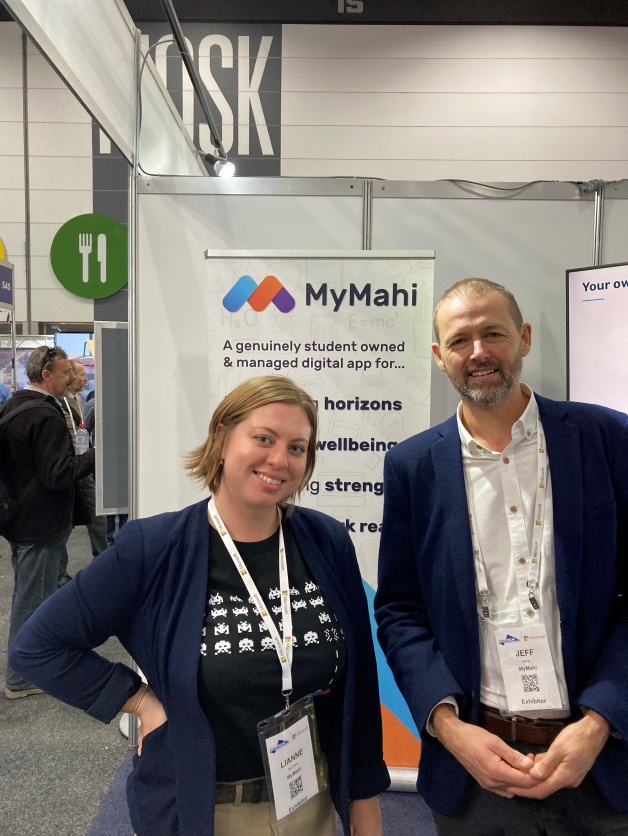
Lianne & Jeff King, Co-founders of MyMahi
In the spirit of collaboration, ENZ hosted an event at the NZTE Pavilion that enabled all 15 companies to connect with a number of Australian education providers as well as with NZTE, to share ideas and insights about edtech opportunities for New Zealand in Australia.
ENZ’s delegation also took part in the local Australian Education Technology Association’s ‘Pasta with Peers’ informal dinner, an opportunity to connect with over 200 Australian edtech founders and CEOs.
“I found the conference really valuable - we actually picked up a series of Indigenous schools to connect in with our Indigenous programme for next year so that was great,” says Will Clarke, Learn English Live co-founder and director.
“EduTech Australia is where it’s happening this week! Lots of information to absorb and great insights on all things edtech! It’s been awesome meeting and spending time with like-minded people who are working hard to build their businesses and brand outside of NZ. With the support of ENZ and the introduction to the NZTE team here, the future looks bright for Pacific Kids Learning,” says Evo Leota-Tupau, founder of Pacific Kids Learning.
Aotearoa’s edtech community is increasingly being recognized for the valuable contribution it makes to international education around the world, says Alana Pellow, Business Development Manager at ENZ.
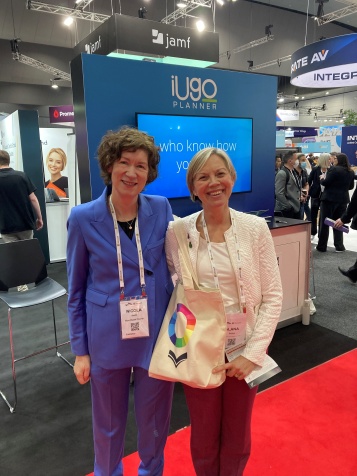
iUgo Founder and Managing Director Nicola Smith with ENZ's Alana Pellow
“For example, it was great to see two edtech companies being included in the Prime Minister’s recent trade mission to Australia, while several edtech exporters featured in Minister Hipkins’ recent international education engagements in the Americas.”
Following ENZ’s successful participation in EduTECH2022, Ms Pellow is keen to explore further opportunities to bring the collective energy and momentum of the edtech sector together, to support its contribution to international education and the outcomes for learners.
More information:
- Aotearoa EdTech Excellence white paper 2021, developed by EdTechNZ in partnership with ENZ, says that more than 90% of New Zealand edtech businesses export or have ambition to export, with the main markets being the United States (26%) and Australia (24%).
- Education 2030 , a report by HolonIQ, includes predictions about the future growth of the global education market and the role of technology.
- Australia Perception Research 2022 | New Zealand Story Group (nzstory.govt.nz), a webinar by NZStory, suggests Australia is one of the most accessible international markets for New Zealand businesses to enter, and highlights Australia’s growing admiration for the values it perceives New Zealand represents – particularly our leadership and indigenous journey. Our te ao Māori values of manaakitanga and kaitiakitanga resonate deeply with both Australian consumers and businesses.
-
Swedish students experience New Zealand at ACG
ACG has partnered with a number of private Swedish high schools as part of a sister-school project, which saw a group of Swedish students and teachers land in Auckland in mid-February for a New Zealand study experience.
The Swedish students are from the Swedish IT High Schools in Helsingborg, Gotheborg and Uppsala. During their three weeks in Auckland, the students have divided their time between ACG Senior College and ACG Yoobee School of Design – exploring practical study and pathway opportunities.
As well as experiencing the daily life of an Auckland student, the Swedes have also enjoyed a variety of activities, including day trips to Waiheke Island and Tiri Tiri Matangi Island.
Evelina Friman, from Gothenburg has enjoyed her experience, and said she would definitely recommend New Zealand to other students.
“The city, diversity and people are amazing. The teachers and the schools that we attended were great as well. The locals are very friendly and make you feel like part of the community.”
“I enjoyed ACG Yoobee School of Design the most – to have the opportunity to film in such beautiful nature is a blessing.”
Each year through a programme called Atlas, the Swedish government provides funding to high schools looking to establish international links with schools from around the world.
ACG’s Director of Marketing, International, Kim Harase, half Swedish herself, was quick to respond.
“For ACG, this is a great opportunity to develop an exchange with like-minded students and teachers from a country that shares many values with New Zealand, including a love of nature, respect for individuality and a commitment to interaction with the world,” said Kim.
Last year, ACG invited a group of Swedish teachers to Auckland and together developed the project to send the first Swedish students to ACG. Further visits from Swedish teachers and principals in 2016 saw interest grow in New Zealand as a study destination.
Olga Elli, ENZ’s Education Marketing Manager – Europe, said teachers and students in Sweden know New Zealand for its quality education system and lifestyle balance.
“Many Europeans view New Zealand as a place to learn both in and out of the classroom. The ‘adventure’ of study in New Zealand is what drives many Scandinavians to come here,” said Olga.
The students will head back to Sweden at the end of this week, but ACG is already planning to reunite them with their new Kiwi friends.
“The long-term plan is for New Zealand students and teachers to go to Sweden as part of a genuine two-way exchange,” said Kim.
“We are delighted with the experience and look forward to further expand the collaboration.”
-
From the Acting CE: Open for business – international education and the vocational reforms
I am therefore very pleased that Education New Zealand has the opportunity to contribute and support the work of the establishment unit for the New Zealand Institute of Skills and Technology (NZIST) and the reforms.
The NZIST will bring together the existing 16 ITPs to create a unified, sustainable public network of vocational education.
As we all know, New Zealand enjoys a strong reputation for work-ready education and industry training.
The reforms should build on New Zealand’s reputation as a high-quality choice for international students. They should also help develop a strong national identity for the vocational sector, representing a significant opportunity for providers to attract overseas students.
They should also help ensure a regional spread of students across New Zealand, with a lot of benefits for the regions – including skills, diversity and revenue.
I’m also very pleased to see that the reforms recognise the importance of international education. One of the seven IST work streams focuses entirely on it.
The International Education Working Group is chaired by Michelle Jordan from Venture Taranaki. Members are drawn from across nine institutes of technology/polytechnics and one skills organisation.
We are working closely with the group to support their work. And we’ll continue to work with them through the journey to share our experience and expertise.
The NZIST has a huge challenge ahead. And the changes to the country’s vocational education system will take time to embed.
While there is much happening at the provider level, the message for the sector and international students is that it’s business as usual. ITPs are open for business. And ENZ is continuing to market them. Students can continue to enrol at ITPs for 2020 as usual, including for multi-year programmes. Existing programmes, qualifications and credentials will continue to be recognised internationally.
The changes will take time, but they are an investment in the future of New Zealand’s vocational education and international education sectors.
