Search
Showing 10 of 7351 results
-
Insights from China
Session One: It’s all about the relationship: that’s the main message to emerge from a panel discussion between education providers that have partnered with institutions in China.
Professor Alister Jones is Senior Deputy Vice-Chancellor of the University of Waikato, which has a joint institute to fully deliver its degrees at Zhejiang University City College in Hangzhou.
“It can take 15 to 25 years to create those relationships so it’s important to maintain your China team,” says Alister.
Steve Burt, Director of International Education at Kāpiti College, says his school began developing its ties with schools in China by working with a Chinese education bureau eight years ago.
For the Eastern Institute of Technology (EIT), developing relationships with organisations in China’s provinces help it diversify and build on its strengths in viticulture and wine.
Fred Koenders, EIT’s Executive Dean for Commerce and Technology, says China is looking to increase its capabilities in vocational education.
Tips for forming partnerships
The panel’s tips for partnering with institutions in China include:
- Do your research.
- Be prepared to invest time and money into developing the relationship.
- There is no substitute for face-to-face communication.
- It’s critical to have a fluent Chinese speaker on your team.
- Your Chinese partners may become friends for life.
Session Two: Digital marketing in China
China has a unique and challenging digital landscape. So how can New Zealand’s education sector use digital marketing to effectively promote themselves in China?
Euan Howden, ENZ’s Director of Marketing Platforms and Campaigns, and Jordi Du, New Zealand General Manager of digital agency UMS, shared their insights into China’s social media landscape at NZIEC.
Is WeChat enough?
Jordi advises education providers adopt an omni-channel approach to digital marketing in China, rather than relying on WeChat.
He says it’s important to look beyond WeChat because:
- There are barriers to registering a WeChat official account.
- It can be expensive to invest in content, media and campaigns.
- It’s difficult to measure conversion.
- WeChat isn’t the right channel to target Generation Z (born from the mid-1990s to early 2000s) or possibly Generation Y (born from 1980 to 1994).
ENZ’s approach
Western websites and social media platforms have issues with accessibility, performance and loading speed in China, so ENZ has created bespoke digital technology to share the New Zealand education story with Chinese students.
We have multiple touchpoints with our Chinese audience, including an official WeChat account, a China-hosted version of our Study in New Zealand website, email, online media and a WeChat mini program to encourage students to use our My StudyNZ tool to connect with New Zealand education providers.
Creating a content strategy
When it comes to content strategy, Euan says some things are the same in China as they would be anywhere else.
“People want relevant content, in the right place, that resonates with them and makes them want to learn more.”
He advises using your own sources, such as current students, alumni, parents and agents, to create and share content across channels and tools.
Euan also suggests:
- Choosing the right platform by understanding where your target audience is.
- Developing carefully targeted content in the best possible format.
- Aligning with ENZ’s campaigns for better brand recall.
- Exploring and making use of key opinion leaders (KOLs) in China.
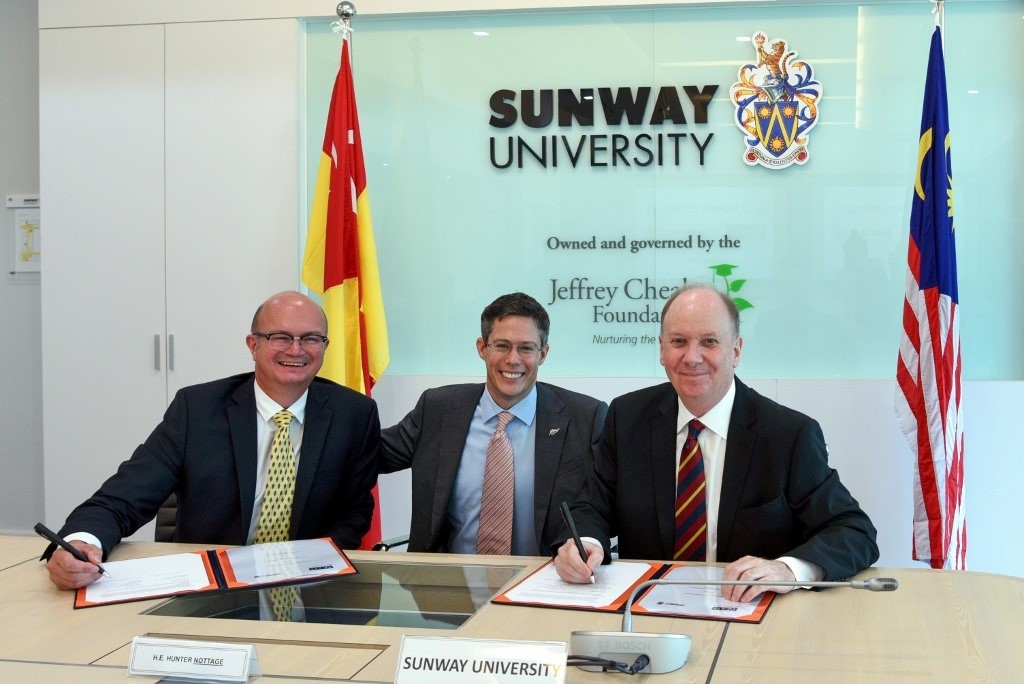
- EIT signs MOU with Sunway University in Malaysia
- Waterfront 3 resized for website
- Picture10 v2
- NZIEC image
-
Education New Zealand marks reopening of borders with new global campaign
Denver Colorado, 31 May 2022: Education New Zealand Manapou ki te Ao at the NAFSA Conference in Denver, Colorado today revealed for the first time a new global marketing campaign emphasising New Zealand’s unique attributes for international students as the country opens for business on 31 July after two years of closed borders.
Central to the campaign are the stories of eight international students from, China, Colombia, Germany, India, Japan, Thailand, USA, and Vietnam. The students share their experience of study and life in New Zealand, and the benefits that result from the weaving together of different cultures in a uniquely New Zealand way.
Education New Zealand invited the eight students to work alongside world-famous Māori fashion designer Kiri Nathan to collaborate on designing a new type of education garment that embodies the cultural values that make a New Zealand education unique: manaakitanga (care of people), kaitiakitanga (care of place), and the pōtiki spirit of youthful energy and finding a better way. The narratives in the campaign are focussed on the students’ experiences and goals, and explore themes such as work and career readiness, sustainability, and innovation through collaboration. It is a campaign authentically rooted in Te Ao Māori values.
“The traditional academic gown worn by students when they graduate is a symbol of achievement, capturing a snapshot in time,” says Ms. Nathan. “Our ‘kākahu’ (garment) symbolises not only this attainment, but most importantly the cultural journey these students have undertaken and will continue throughout their lives. Their experience in New Zealand has changed them, weaving and sharing the values of Te Ao Māori into the unique cultures of their own homeland. The final kākahu designs are a unique collaborative effort, globally-minded and inspiring – just like the students.”
Kiri Nathan is best known for her extensive experience of the modern fashion world infused with her Te Ao Māori roots. She has developed pieces for international figures including Barack Obama, Beyoncé, and the Duchess of Sussex. As a Māori mentor running the Kāhui Collective, she has seen a significant number of NZ Māori fashion designers feature at the NZ Fashion Week, Guangzhou Fashion Week, Hong Kong Fashion Week, and the Fiji fashion week. She also led a delegation to China to meet high level fashion networks and create pathways to market.
More than qualifications
At the core of the campaign is the concept that education with New Zealand is far more than the attainment of academic qualifications.
“What we offer global students is an opportunity to experience something new, different, and ongoing,” says Education New Zealand Chief Executive, Grant McPherson. “It is a new perspective that redefines success in global education beyond degrees and academic achievement and builds greater understanding of the value of continuous learning throughout life.”
“When you study with New Zealand, you’re invited to bring your whole self. You will benefit from New Zealand’s cultural values as well as our high-quality education that embodies innovation, practical learning, and preparing you for the future.”
“But we also know New Zealand benefits too. We want students to bring their stories, their culture, and their perspectives so that we can learn from each other and build a future that is connected, strong and adaptable.”
Across the eight kākahu three sustainable textile options have been used in their manufacture – upcycled commercial linen, sustainable wool from New Zealand mills, and deadstock from fabric wholesalers.
The campaign was launched as part of Education New Zealand’s participation at the NASFA 2022, the world’s largest international education conference and Expo in Denver, Colorado. The campaign will roll out across New Zealand’s key partner countries from June 2, 2022 and runs for 12 weeks initially.
The eight students:
Hanbo Wang (Kevin), from China, studying Viticulture and Wine Science at the Eastern Institute of Technology in Hawke's Bay.
Octavius Jones, from the United States of America, a PhD student in the Te Kawa a Māui department at Victoria University of Wellington. Octavius is studying digital storytelling, African and Māori studies.
Tiara Das, from India, studying Science - Psychology and Neuroscience at the University of Otago in Dunedin.
Bryann Avendaño, from Colombia, studying Civil and Natural Resources Engineering at the University of Canterbury in Christchurch.
Hanna Watanabe, from Japan, is a Year 12 High School student at Rangiora New Life School, in Rangiora, Canterbury.
Khanh Phuong LE, from Vietnam, studying Law at Waikato University, Hamilton.
Atis Suksingha, from Thailand, studying Commerce, majoring in International Business and Marketing at the University of Otago.
Malina Grube, from Germany, studying Law at the University of Auckland, Auckland.
To learn more about our new campaign, visit I AM NEW on Study with New Zealand, and watch our campaign hero video below:
YouTube - Overall September 2015 regional visa dashboard final 0
-
New travel rules for NZ coming soon

From 1 October, some international visitors and transit passengers must have an NZeTA (New Zealand Electronic Travel Authority) before travelling to New Zealand.
The NZeTA is a new border security measure. It is not a visa and does not guarantee entry to New Zealand.
From 1 October 2019, travellers must have authority to travel to New Zealand. This means they must hold one of the following:
- An NZeTA (or an NZeTA exemption)
- A visa
- Citizenship of New Zealand or Australia.
What does this mean for international students?
People who are planning to come to New Zealand to complete a short-term course will need to apply for an NZeTA if they are coming from a visa waiver country. Friends and family planning to visit students in New Zealand will also need one, as well as education agents visiting on business.
International students who require a visa to study will not need an NZeTA.
Travel agents, student agents and schools can assist international students with applying for the NZeTA by downloading the NZeTA mobile app or visiting the Immigration New Zealand website.
There is a small fee attached: NZD$9 for mobile app requests and NZD$12 for website requests.
The only official way to request an NZeTA is through Immigration New Zealand. Travellers should be advised not to request an NZeTA through any unauthorised third party.
Visit the Immigration New Zealand website here for more information.
See a factsheet on the NZeTA here.
-
Ask New Anything: ENZ's next global campaign

Launching in mid-October, ENZ’s global digital campaign 'Ask New Anything' is our most technically sophisticated campaign yet.
The 'Ask New Anything' campaign aims to challenge commonly held perceptions of New Zealand and increase awareness of the country as a high-quality study destination. It does this in a new and innovative way – by inviting audiences in 14 international markets to question what they know about New Zealand.
'Ask New Anything' will be the first time the refreshed 'Think New' brand has been widely used in digital channels. To read more about ‘I AM NEW’, see the E-News story ‘A brand NEW day’.
The campaign brings together ENZ’s digital insights, the refreshed brand and the Study in New Zealand chatbot Tohu, to give prospective students the answers they need to make an informed study decision.
The creative concept
Drawing on Google search data, China-specific insights and data from Tohu, we’ve pulled together a list of the most commonly searched questions about studying in New Zealand.
We put these questions to real international students, a New Zealand student, a teacher, a parent and an employer and recorded their responses in 100 unscripted videos.
As well as being used on YouTube, Facebook and other digital media, the videos will be available on demand in Tohu the chatbot (who can be found on the studyinnewzealand.govt.nz website, the NauMai NZ website and Facebook Messenger).
If asked a question it cannot answer, Tohu will direct prospective students to a new Facebook group or Instagram Live event, where they can ask current international students their questions in real time, delivering on the promise that you can 'Ask New Anything'.
In China, the campaign will use the most relevant questions for the market within WeChat and other local platforms.
ENZ Director Platforms and Campaigns, Euan Howden, says: “Harnessing our award-winning data and marketing platform, we're bringing the refreshed 'Think New' brand to life with a level of technical sophistication that we couldn't have dreamed of a year ago. I'm looking forward to seeing how audiences engage with this campaign, and how this affects their perceptions of New Zealand as their preferred study destination.”
Introducing the new brand
The campaign will be the first global digital showcase of the refreshed 'Think New' brand which positions our international education brand for success and defines quality by the ways we help students make their mark on the world. Additionally, the campaign captures New Zealand’s values of societal openness, transparency and manaakitanga.
ENZ Director Brand and Design, Kaylee Butters, says: “This is the most interactive campaign we’ve run to date. The involvement of our Kiwi Ambassadors and the direct connections enabled by the Facebook group and Instagram Live events really underpins the authenticity of the brand and puts our students right at the heart of the creative concept.”
More information
To find out more about the campaign, and how you can leverage this activity in your own marketing, please click here. This webpage will be updated regularly throughout the campaign as new information and resources become available.
- 0099 Studyinnewzealand ThinkNEW 002